
BrightSign
Custom IO Bridge
A custom device that puts every input and output on a BrightSign player under remote control, with firmware and over-the-air updates.
- Custom electronics
- Enclosure design
- Firmware
- OTA updates

Product development
One team takes ownership of the complete system: electronics, firmware, mechanical design, software, cloud, prototyping, and early production.

Why it's hard
When each discipline belongs to a different vendor, the seams are where schedules slip and budgets disappear. We design the whole system together, so they get solved early.
The board runs fine until it needs an update, and there's no safe way to deliver one.
The case looks right, but nobody checked it against the antenna.
It works as one unit, but needs a redesign before anyone can make a hundred.
Code ships before anyone decides how devices get set up, secured, and managed.
The lifecycle
Start at whatever stage you're in. Some clients arrive with an idea on a napkin; others bring a prototype that needs to become a product.
Paid discovery, sized to the project, to understand the problem, the constraints, and the options. It ends with a written proposal with scope, schedule, and quote that is yours to keep.
Electronics, firmware, mechanics, software, and cloud, worked out together as one system instead of five separate projects.
Build working hardware in house and get it into people's hands quickly.
Prove it works in the real world, then refine it until it's ready to build in quantity.
Produce early units with programming, provisioning, testing, and QA built into the process.
Prepare the product and the paperwork for a contract manufacturer when volume justifies it.

Prototyping and fabrication
We design and fabricate prototypes in house, which keeps iteration fast and keeps design decisions close to the hardware. Short loops between design and the bench mean fewer surprises later.
Software, cloud, and the device lifecycle
Connected products live or die on what happens after they ship. We plan provisioning, updates, monitoring, and support alongside the hardware, so devices can be configured, fixed, and improved in the field.
Including

Manufacturing and scale
We support small-to-mid-volume production directly: assembly, programming, provisioning, functional testing, QA, and packaging. When volumes reach the thousands or otherwise justify it, we prepare the design, documentation, test process, and supply chain for a contract manufacturer and help transfer production.
We are not a mass-production factory, and we won't pretend to be. We evaluate every project on its own quantities and timeline.
How we hand off
Depending on your agreement, deliverables can include source code, firmware, CAD, PCB design files, Gerbers, BOMs, and documentation: what you need to maintain and manufacture the product without us.
Installation, connectivity, provisioning, remote updates, monitoring, replacement, and serviceability are design inputs, not afterthoughts.
We design with manufacturing in mind from the start and help move production to a contract manufacturer as volumes grow.
We identify likely certification and regulatory considerations early, design around them, and work with qualified testing labs and partners. We are not a certification lab and don't guarantee outcomes.
Proof
BrightSign
A custom device that puts every input and output on a BrightSign player under remote control, with firmware and over-the-air updates.

LAND Moto
Firmware, cellular connectivity, a secure cloud backend, and a live dashboard connection for LAND Moto's electric motorcycles.
Rock & Roll Hall of Fame
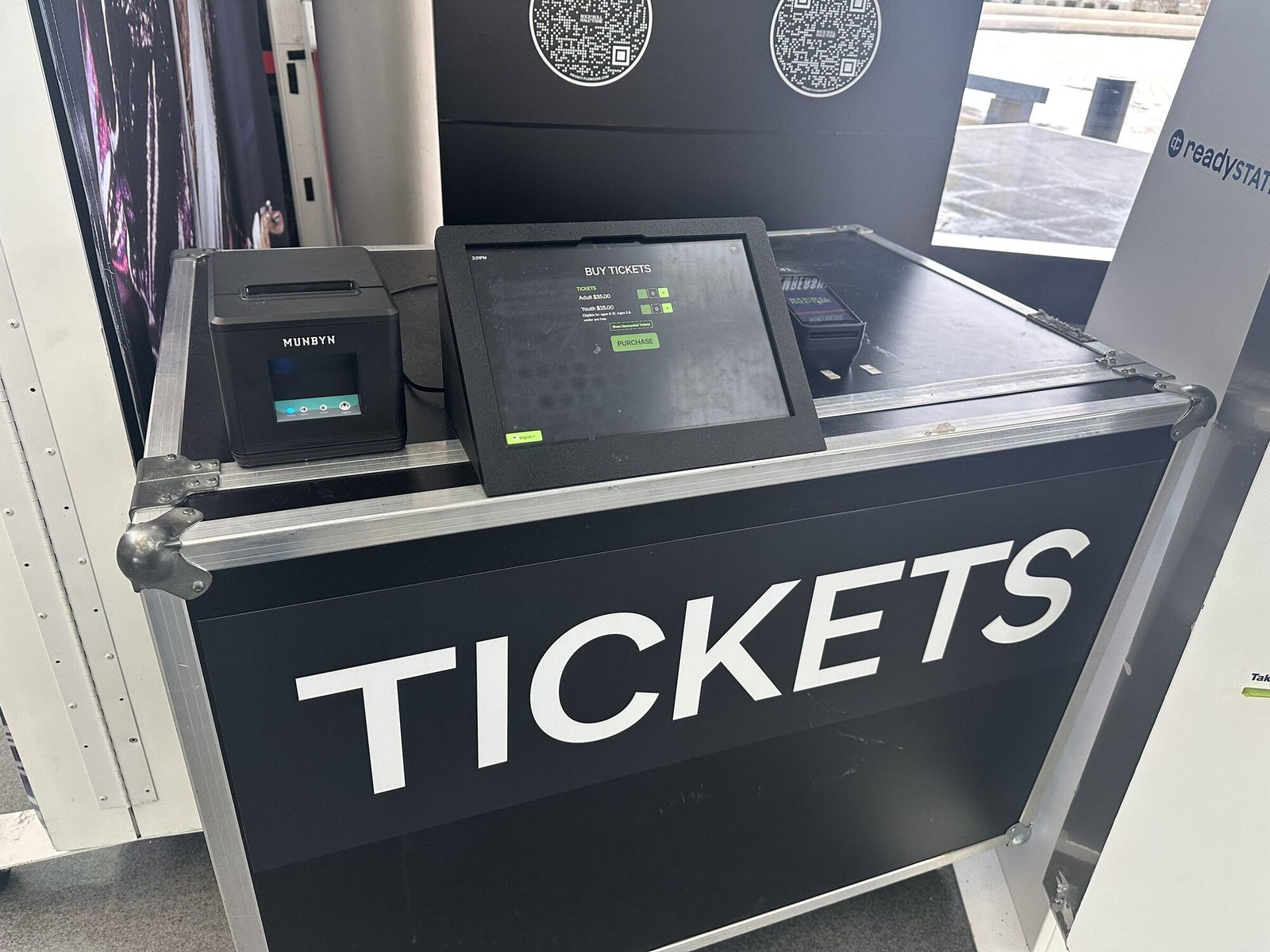
Self-service kiosks for timed-entry admission, with card payments and QR-code receipts that staff scan at the door.
Rinth Labs
Open-source automatic part feeders for pick-and-place machines running OpenPnP.
Working with us
It starts with discovery, sized to the project, where we dig into the problem and agree on a direction, followed by a written proposal and quote. Once you approve it, we design and prototype in stages, so you see working progress and make decisions with real hardware in hand.
Every project is different, so we quote from a real plan, not a guess. How we get to that plan depends on what you're building.
A straightforward job can go almost straight to a quote. Most projects start with paid discovery, where we work through what you need and land on a solution or a few directions worth pursuing. Discovery is sized to the project: a focused conversation for something simple, more time for a large, complex product. We'll tell you up front what it involves and what it costs.
Discovery ends with a detailed proposal and an accurate quote. It's yours to keep, and detailed enough that you could take it to another studio if you choose.
Yes. Plenty of projects arrive as a prototype that works on the bench but needs to become reliable, manufacturable, or connected. We pick up from wherever you are.
The people designing and building your product, starting with our founder, Ben Nyx. There are no account managers relaying messages, so your questions get answered by someone who knows the hardware and the code.
Yes. We can own the whole system or cover the disciplines your team doesn't have, and hand the work back with documentation either way.
Then it's better to learn that early and cheaply. Discovery exists to answer that question before you commit to a full build.
It depends on scope. The proposal includes a staged schedule you can plan around, and you see working progress at each stage.
Cleveland, Ohio, but our clients are all over the country, with recent projects in California, Colorado, and Florida. Most of the collaboration happens over video calls and shared files, and prototypes ship to wherever you are.
An idea, a sketch, a prototype, or a product that needs to scale. You don't need a spec to start the conversation.
